
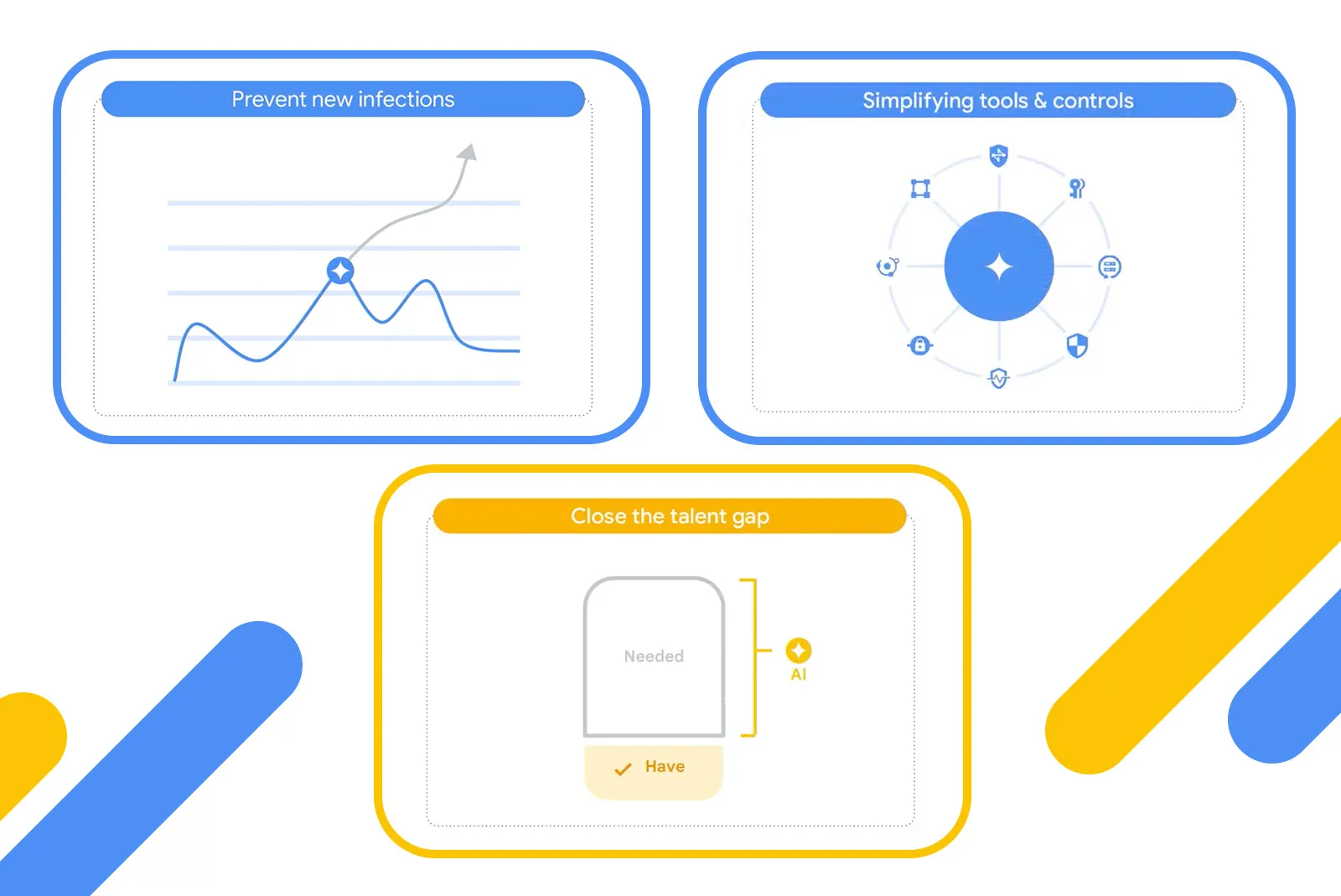
Recent advances in artificial intelligence (AI) are helping security professionals be better and more effective at what they’re already doing. As cyberattacks rise in frequency and complexity, AI-powered tools offer valuable assistance for defenders in situations where time is of the essence.
Ensuring these tools are deployed responsibly is an essential piece of the Secure AI Framework, which aims to collaboratively secure AI technology. Through partnerships with the National Institute for Standards and Technology (NIST) and International Organization for Standardization (ISO) as well as efforts to identify vulnerabilities through AI “red teaming,” AI is playing a central role in ongoing conversations about cybersecurity.
Why this matters: AI has already started a cybersecurity transformation. But unclear industry standards and a shortage of 650,000+ security professionals in the U.S. have underscored the need for AI solutions that can help improve current systems and offer additional protection of national interests. Here are three ways AI is setting a new standard in cybersecurity:
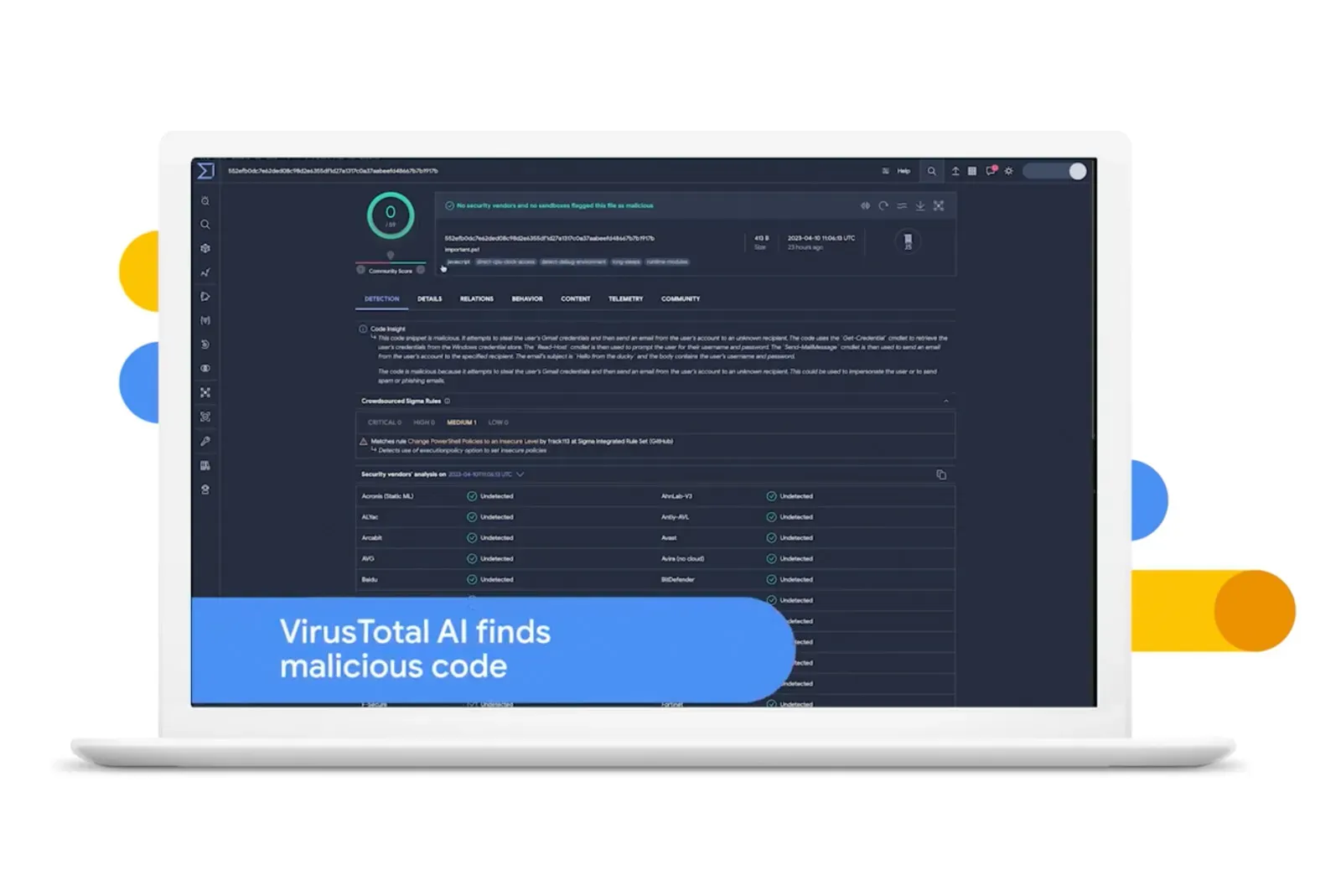
With the help of AI, cybersecurity professionals can identify patterns in data to detect attacks faster and more effectively.
AI detects—and prevents—threats in real time
In many cases, cybersecurity is all about speed. The faster cyber professionals can identify a threat, the sooner they can defend. AI can recognize patterns found in large amounts of data to proactively identify threats and take preventative action before a security practitioner can.
In early 2023, Accenture became the first company to utilize the Google Cloud Security AI Workbench. With this expanded Google Cloud partnership, Accenture has implemented security-specific generative AI to accelerate incident detection, analysis, and response—mitigating the impact of security incidents. Automating these tasks reduces the burden on security teams and helps make threat detection more accurate and efficient.
- AI fights false positives: False positives are instances where teams are incorrectly alerted to a threat that isn’t present. They can account for nearly half of all alerts received by security professionals. Crucially, AI can help address false positives without direct human intervention, saving security professionals valuable time and resources.
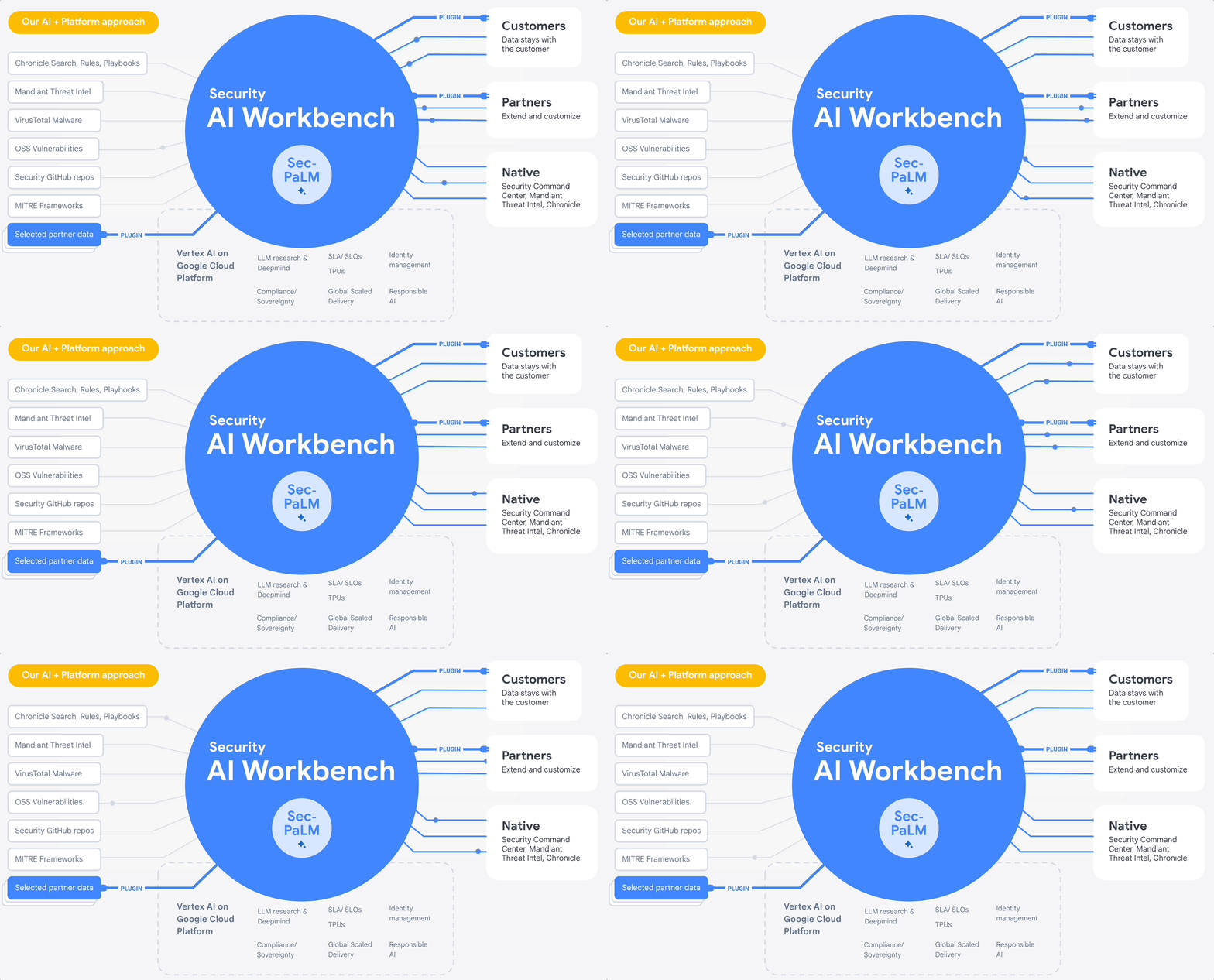
Cyberattacks are ever-evolving. AI can constantly monitor network traffic to keep track of them.
AI monitors network traffic non-stop
Preventing cyberattacks before they infiltrate networks and spread requires constant, always-on monitoring. Keeping pace with thousands of evolving threats requires a lot of repetition and can be mundane, creating a lot of toil for workers. But implementing AI in your workflows can address that. Since 2019, leading cloud security company Zscaler has used Google Cloud’s AI capabilities to train a machine learning model that can detect, predict, and block potential threats. Using AI, Zscaler says it’s able to block thousands of threats every second to help keep customers safe.
By constantly evaluating information entering and exiting networks, AI fights cyberattacks alongside human experts—detecting threats and augmenting the incident response process.
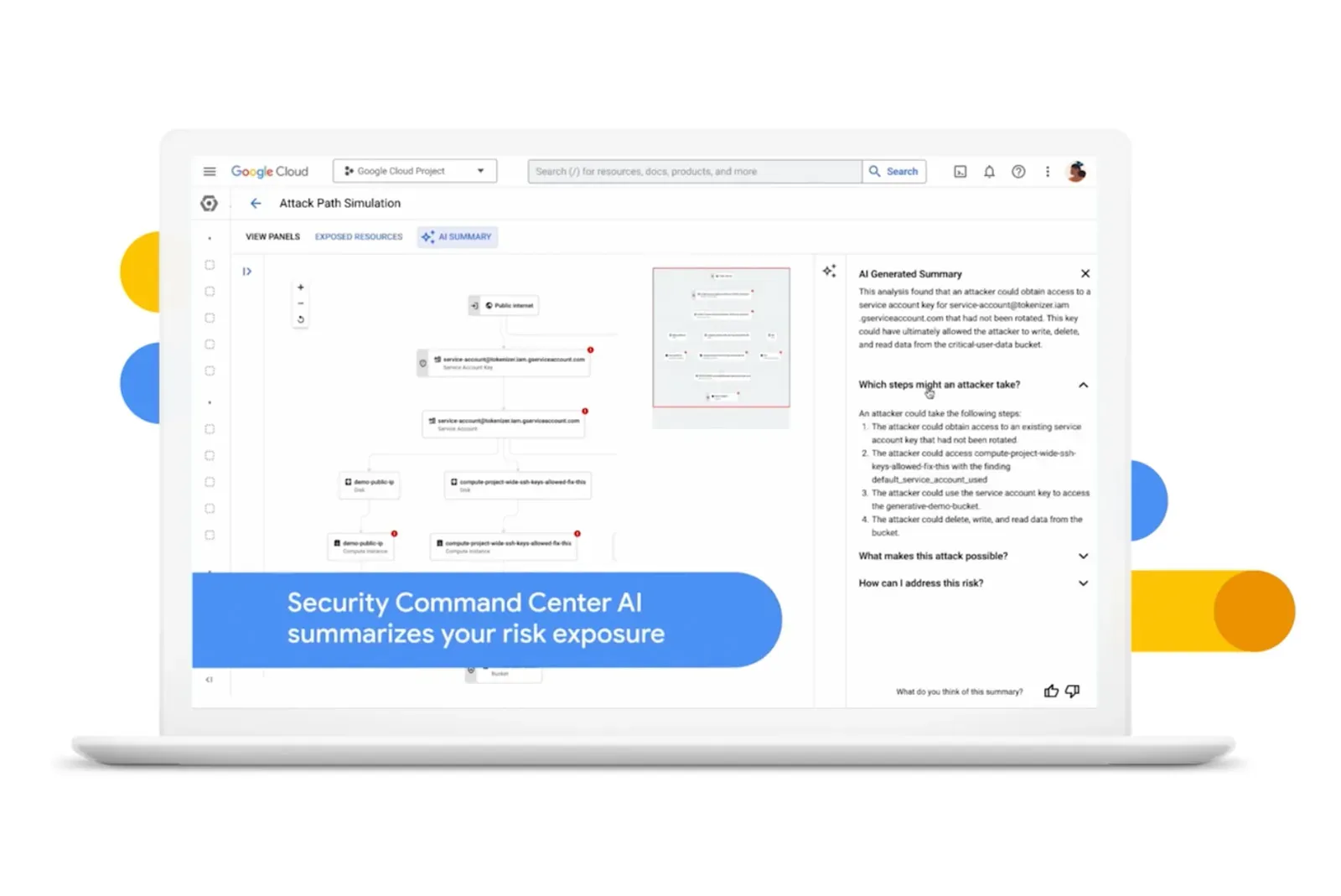
AI’s ability to identify suspicious behavior is crucial to keeping sensitive data secure.
AI analyzes user behavior to prevent data breaches
Sensitive data can be stolen by bad actors, but it’s also common for it to be leaked from inside an organization, whether intentionally or accidentally. These vulnerabilities can be as simple as the mishandling of sensitive data or using weak passwords, but they have big implications when it comes to confidential information.
In June, global IT company Thales announced a new partnership with Google Cloud that will use generative AI for data security, improving its ability to discover, classify and protect their most sensitive data. Using AI’s ability to understand semantic context, it can help Thales discover and classify sensitive information within its repositories and ensure it remains within set boundaries.
AI offers a clear solution to prevent these incidents by helping teams analyze user behavior to identify behavior patterns and flag suspicious activity. Using AI as a partner makes defending the network easier to identify potential security threats.
Learn more about the role that AI can play in cybersecurity from our Cybersecurity Action Team and explore our latest innovations in the space: using generative AI at Google Cloud, the Security AI Workbench and the Secure AI Framework.