
In 2021, around 2.3 billion people in the world were moderately or severely food insecure. And the numbers in recent years have been going in the wrong direction. The impact of extreme heat, droughts, and flooding on farming—all caused by climate change—play no small part in this problem.
Every few weeks on my podcast, Food Lab Talk, I have the opportunity to speak with innovative leaders who are making bold moves to create a better food future for us all. Much of their work aligns with our focus at Google to reduce food waste, which makes up a notable eight percent of the world’s carbon footprint. Something we’re just beginning to get into in these conversations is what we can do to redesign aspects of our food systems to prevent hunger.
One thing that inspires me is the role that AI can play in helping farmers. From deciding what seeds to plant, to protecting crops from pests, local farmers are starting to use AI to help them make data-driven decisions.
Putting agricultural expertise into the hands of every farmer in India
WADHWANI AI | Google.org Grantee
Link to Youtube Video (visible only when JS is disabled)
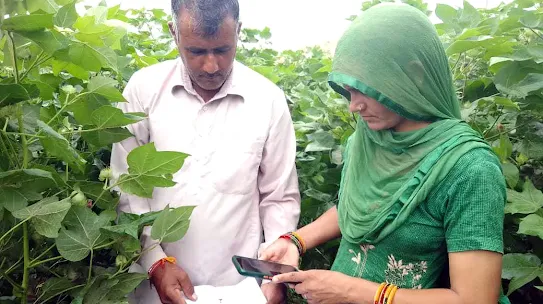
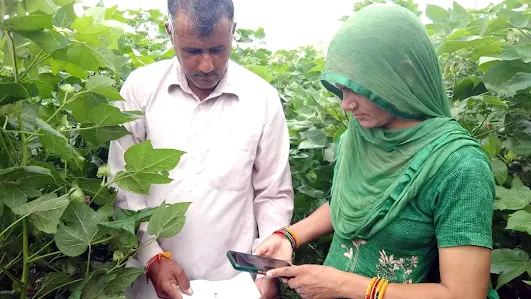
WadhwaniAI’s app, built with grant funding and a team of engineers working in a pro-bono capacity from Google.org, has both increased yields and reduced the need for pesticides.
Last week, at Google for India, Google.org announced a $3.3M in new funding to Wadhwani AI, who are using AI to bring the world’s agricultural expertise to every farmer. With support from Google.org, WadhwaniAI built an app that can identify pests and quickly recommend mitigation strategies for farmers.
After seeing farmers’ profits increase by 20% and pesticide use decrease by 25%, India’s Ministry of Agriculture is rolling out the new technology across the country with 10 staple crops, including rice, wheat, and corn, showing AI’s potential to mitigate the threat of hunger for billions of people by protecting critical crops.
On this week’s episode of Food Lab Talk, I spoke with Wadhwani’s Aditya Nayan and Soma Dhavala, who shared critical insights about responsibly using AI in this space – starting small, including the community, and the value of building open source technology to scale your impact.
Other nonprofits are also bringing responsible AI applications to the agricultural sector. These organizations are helping farmers integrate technology to their daily lives to produce sustainably and maximize yields.
Using AI and satellites to preserve ecosystems in Sub Saharan Africa
PLANT VILLAGE | Google.org Grantee
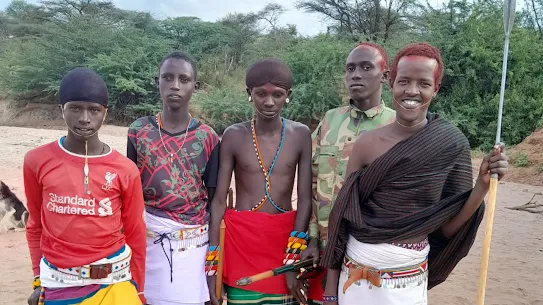
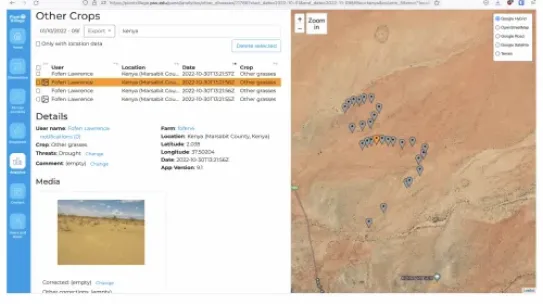
A map depicts the track of a local Moran working with Plant Village as he moves across the landscape around Kor, Marsabit County, Kenya. Data collected by the Morans is fed into PlantVillage's cloud system, and helps local farmers determine the areas where their animals can graze, and also the areas they must work to regenerate to avoid ecosystem collapse.
In Africa, Google.org grantee PlantVillage created "PlantVillage Warrior View,” a platform that enables young tribe warriors to help develop accurate maps of dryland landscapes using AI-powered smartphones connected to a global suite of satellites. As temperatures rise, people living in these regions are facing increased risk of starvation and extreme poverty as animals are left with nothing to graze and soil isn’t conducive to growing crops. By directing locals to suitable grazing areas and guiding regeneration efforts, the maps help farmers sustain their land, food sources, and livelihood.
Engineering new climate-resilient rice crops in Asia
INTERNATIONAL RICE RESEARCH INSTITUTE | Google.org Grantee
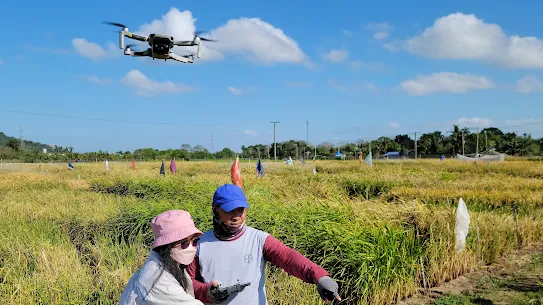
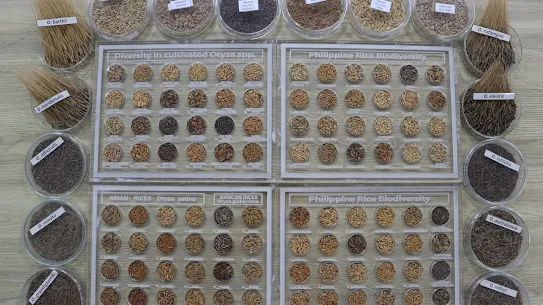
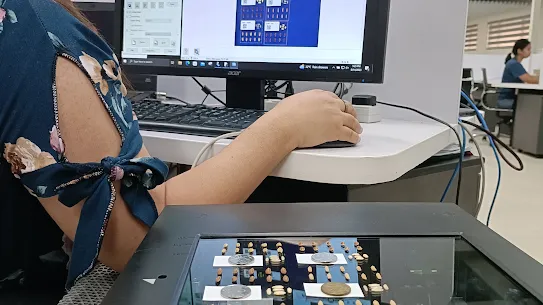
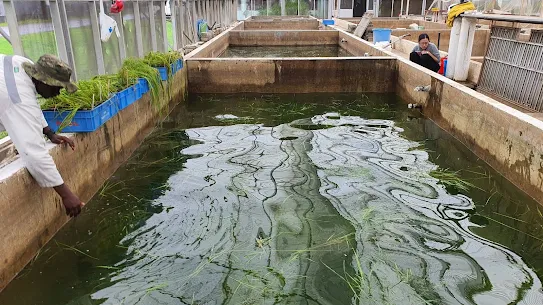
IRRI tests their large library of rice samples in a variety of different environments – from drought to flooding. Results are digitized and fed into the iterative process of creating new types of rice that are more resilient to climate change.
One of Google.org’s recent AI for the Global Goals grantees, International Rice Research Institute (IRRI), is using AI to identify ways to better utilize the world’s largest, most diverse collection of rice seeds. With data-backed insights, they’re developing climate-resilient rice varieties that will better equip farmers to adapt to climate change. Rice is a main staple food for over half the world’s population and main source of income for 144 million smallholder farmers. Economists from IRRI project that the benefit of farmers in Asia and Africa adopting new varieties is enormous: an estimated $30 billion after five years from release.
By 2050, the world’s population is estimated to reach 10 billion. That’s a lot of mouths to feed. I’m very excited about the work these organizations are doing to pair the deep expertise of farmers on the ground with the accelerative power of AI – and the impact that it’s already having in the field.